

12 min read
Bathroom waterproofing under the NZ Building Code: a plain-English guide
NZ bathroom waterproofing explained: Building Code clause E3, E3/AS1 and E3/AS2, membranes, falls, flood testing, PS3 producer statements and inspections.
Tiles and grout look waterproof, but they are not. Cement-based grout and the joints around a tiled shower let small amounts of water through, and BRANZ notes that failure of tiled wet areas is a common problem in New Zealand. What keeps water out of the framing, the floor and the room below is the waterproofing membrane underneath, plus the falls, wastes and sealed joints around it.
This guide explains in plain English what the New Zealand Building Code asks for in bathrooms and showers, how membranes differ, and where flood tests, PS3s and council inspections fit. It is general information only. The Building Code documents, your designer, your council and the membrane manufacturer's instructions always take priority.
The rules in brief: clause E3 and its Acceptable Solutions
Clause E3 Internal moisture
Clause E3 of the Building Code covers internal moisture. Among its performance requirements:
- E3.3.3 Floor surfaces of any space containing sanitary fixtures or appliances must be impervious and easily cleaned.
- E3.3.4 Wall surfaces next to sanitary fixtures or appliances must be impervious and easily cleaned.
- E3.3.5 Surfaces likely to be splashed or contaminated in normal use must be impervious and easily cleaned.
- E3.3.6 Surfaces likely to be splashed must be built so water splash cannot get behind linings or into concealed spaces.
Clause E3 also covers ventilation, condensation and overflow. Separately, BRANZ notes that under clause B2 Durability, waterproofing systems under wet area tiling must last at least 15 years.
E3/AS1 and E3/AS2
An Acceptable Solution is one way to show compliance. If you follow it, your work is treated as complying with that part of the Code. There are two for E3:
- E3/AS1, 2nd edition, Amendment 7 (effective 5 November 2020). This sets out solutions for linings, joints, showers, falls and overflow. Amendment 6 stopped being a means of compliance on 3 November 2021, so Amendment 7 is the current version.
- E3/AS2, 1st edition (effective 5 November 2020). This references the Waterproofing Membrane Association's Code of Practice for Internal Wet-area Membrane Systems (August 2020, the "IWAM Code of Practice"). Membranes installed to sections 1 to 4 of that Code, as modified by E3/AS2, comply with clauses E3.3.2 to E3.3.6. Tiling itself is outside the scope of E3/AS2.
Both are free on building.govt.nz; check you have the current version.
What E3/AS1 says about showers
These points come from E3/AS1 Amendment 7. Paragraph numbers are given so you can check the source.
- Impervious floors and walls (3.3.1). All shower spaces need impervious floors and wall finishes. The wall finish must go up to the higher of 1800 mm above the shower floor or 50 mm above the shower rose, and its top edge must be sealed. Penetrations for tapware, mixers and roses must be waterproofed with a proprietary flange system or sealant.
- Tiled shower floors (3.3.1.1). Ceramic or stone tiles with 6% maximum water absorption, waterproof grouted joints and an adhesive the tile maker says suits the tile, substrate and use. The tiles must be laid either within a shower tray specified as suitable for tiles, or on a membrane specified by the manufacturer as suitable for the tiles, substrate and environment.
- Tiled shower walls (3.3.1.2). Tiles with 6% maximum water absorption, waterproof grouted joints and a suitable adhesive, laid on a suitable membrane.
- Showers over baths (3.3.1.3). The bath rim must be at least 15 mm high, and the shower lining must lap over and be sealed to it.
- Enclosures (3.3.2.1). Walls, screens, doors or curtains must run from the floor or top of the upstand to at least 1800 mm above the floor and at least 50 mm above the shower rose.
- Open and level-entry showers (3.3.2.3). Where there is no upstand, or no wall, screen, door or curtain, the floor must fall at no less than 1:50 toward the floor waste across a radius of 1500 mm from a point below the shower rose, or from any wall within that radius.
- Floor wastes (2.2.1). Floor wastes must comply with clause G13 Foul water.
Floors and walls beyond the shower
E3/AS1 paragraph 3.1 sets out floor and wall finishes for spaces with sanitary fixtures. Tiles used as an impervious floor finish need 6% maximum water absorption, waterproof grouted joints and a suitable adhesive, with edges sealed or coved where splash can happen, laid on a continuous impervious substrate or a suitable membrane. In open plan spaces, the impervious floor surface must extend at least 1.5 m from all sanitary fixtures and appliances.
BRANZ recommends going further than the minimum on tiles: E3/AS1 allows up to 6% absorption, but tiles of 3% or less are preferable. Porcelain (0.5% or less) easily meets this.
Why you will see "300 mm above the rose" as well as "50 mm"
The IWAM Code of Practice used by E3/AS2 asks for shower wall membranes to reach the higher of 300 mm above the shower rose or 1800 mm above the floor. E3/AS1 Amendment 7 says 50 mm above the rose for the impervious wall finish. E3/AS2 itself notes the Code of Practice may exceed the Building Code on this height. Some BRANZ articles also quote 300 mm. Many tilers and membrane suppliers simply take the membrane to 300 mm above the rose or to the ceiling, which satisfies both. If you are unsure which applies to your project, check the current E3/AS1 and your consent documents.
How far the membrane should go
The IWAM Code of Practice (section 4.0.6) sets out the extent of a membrane system. In summary:
- Floors: in an enclosed room, the whole floor, contained by a water-stop at doorways; under baths, shower areas, fixtures and cabinetry. In open plan spaces, at least 1500 mm from water sources such as sinks and dishwashers.
- Shower walls: up to the higher of 300 mm above the rose or 1800 mm above the floor, and across to any fixed screen, 300 mm past a curtain line, or 1500 mm beyond a fixed rose in an open shower (600 mm beyond the reach of a hand-held shower).
- Other fixtures: behind and at least 150 mm beyond the edges of basins, vanities and other fixtures with a water supply, and at least 150 mm around pipe penetrations.
- Everywhere else: at least a 75 mm upstand at floor-to-wall junctions.
BRANZ recommends waterproofing the entire tiled floor with upstands of at least 150 mm around the perimeter. It also notes AS 3740 requires the whole floor to be waterproofed where the substrate is timber, particleboard or plywood.
Falls to the waste
Water on a shower floor must always run to the waste. Two rules matter:
- E3/AS1 3.3.2.3: at least 1:50 toward the waste for open or level-entry showers, over the 1500 mm radius described above.
- IWAM Code of Practice 4.1.0.1: falls must be formed in the substrate, or in a screed that is part of the substrate, and not by the membrane itself. The membrane follows the fall; it does not create it.
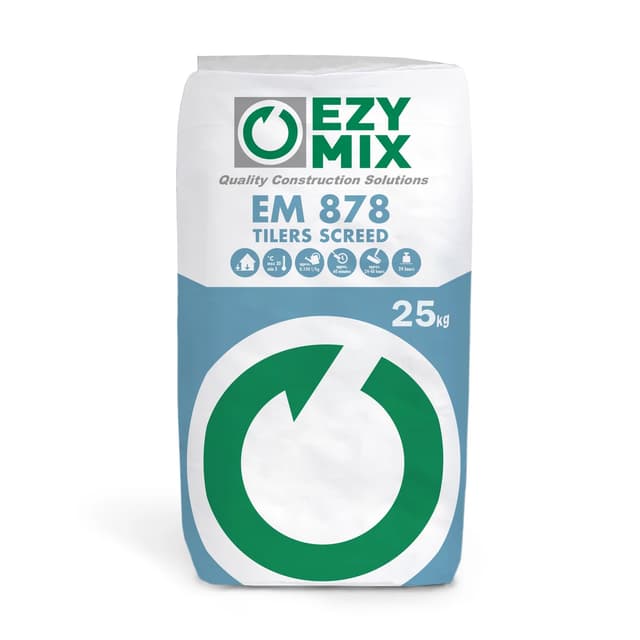
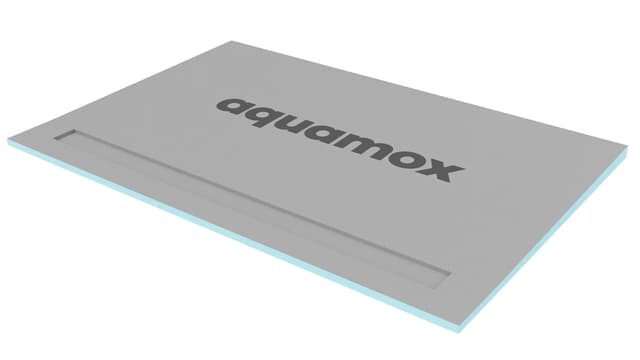
Options for creating falls include a purpose-made screed (our Ezymix 878 Tilers Screed is designed for forming falls in floors and shower bases), a pre-formed tile-over shower tray such as our standard shower bases with channel drain, or falls built into the framing or slab. Choose a floor waste with a flange designed to bond to a membrane, such as our grate-style floor wastes. BRANZ advises rebating the waste flange so it is flush with the substrate and sealing the membrane onto it.

Liquid vs sheet membranes
Wet area membranes in New Zealand are expected to meet AS/NZS 4858 Wet area membranes. That standard sorts them by how far they can stretch before breaking:
Class I
- Elongation at break
- 10% to 59%
- Description
- Low extensibility (rigid)
Class II
- Elongation at break
- 60% to 299%
- Description
- Medium extensibility (flexible)
Class III
- Elongation at break
- 300% or more
- Description
- High extensibility (elastomeric)
BRANZ explains that Class I suits substrates with little movement, such as concrete slabs, while Class III copes with the most movement and suits timber-framed construction.
Liquid-applied membranes
Brushed or rolled on in coats over a primer, with reinforcing tape at corners, joints and penetrations. They suit complex shapes. The keys are the right number of coats, the right dry film thickness and full curing between coats. Cold, damp conditions slow curing.
Examples from our range:
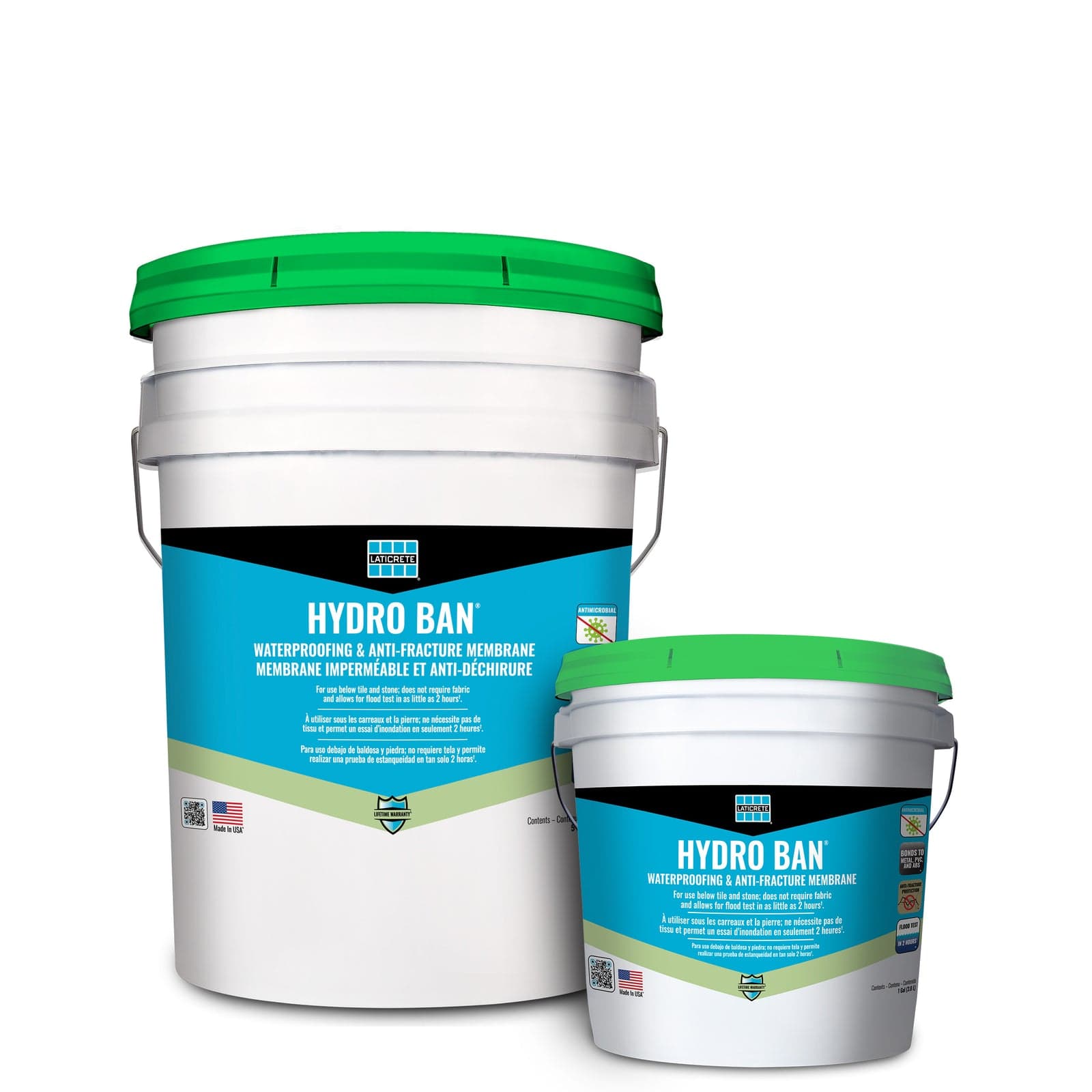
- HYDRO BAN Waterproofing Membrane (liquid membrane, 4 L and 15 L), with HYDRO BAN Fillet Sealant and Waterproofing and Anti Fracture Mesh.
- ARDEX WPM 155 Rapid, described on its page as a Class III polyurethane-acrylic membrane to AS 4858 that can be tiled after 4 hours when used with its matching tape.
- Mapei Mapegum WPS, described as a Class III (over 300% elongation) liquid membrane for internal surfaces.
- Mapei Mapelastic Smart kit and Mapeband Easy tape with matching inside corners.
Sheet membranes
Pre-formed sheets bonded to a primed substrate, with lapped and sealed joints. Thickness is controlled at the factory and there is no waiting for coats to cure, which helps on tight programmes. Junctions, corners and penetrations need careful detailing. An example is STRATAFLEX, a 1.0 mm self-adhering sheet membrane for internal and external areas.
Rules that apply to any membrane
- Use one system. BRANZ and the Code of Practice both call for all components (primer, membrane, tapes, sealants) to come from the same supplier.
- Check adhesive compatibility. The Code of Practice requires the membrane and tile adhesive to be shown as compatible and recommended for use together, and says it is best practice that they come from the same supplier.
- No bitumen under tiles. The Code of Practice says bitumen-based membranes must not be used under ceramic tiles, as the bitumen can bleed and de-bond the tiles.
- Prepare the substrate. BRANZ suggests concrete slabs at no more than 75% relative humidity and plywood at no more than 18% moisture content before waterproofing. Particleboard is not permitted as a new substrate under the Code of Practice.
You can browse primers, membranes, tapes and adhesives in our adhesives and grout category.
HYDRO BAN Waterproofing Membrane
Laticrete
from $82.50 each + GST
$94.88 each incl. GST
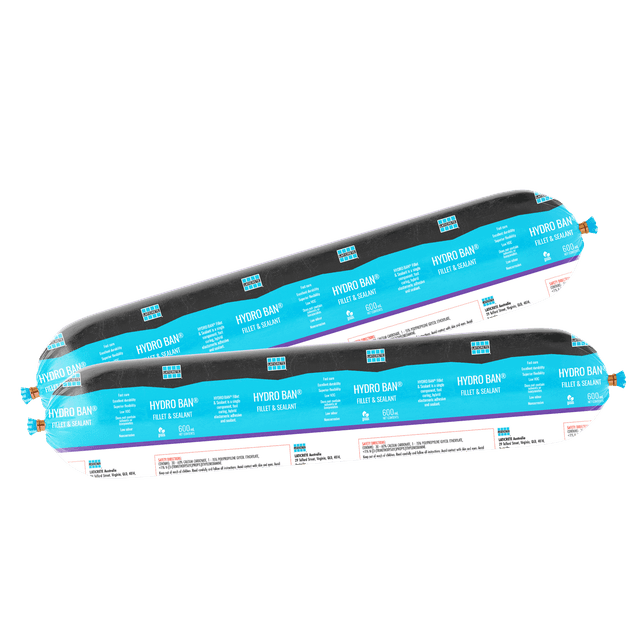
HYDRO BAN Fillet Sealant Sausage 600ml
Laticrete
$33.00 each + GST
$37.95 each incl. GST
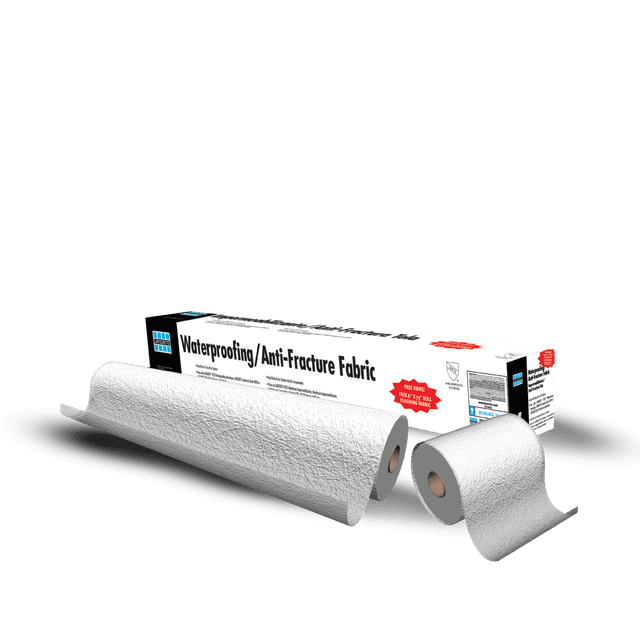
Waterproofing & Anti Fracture Mesh 15cm x 23m
Laticrete
$33.00 each + GST
$37.95 each incl. GST
- In stock
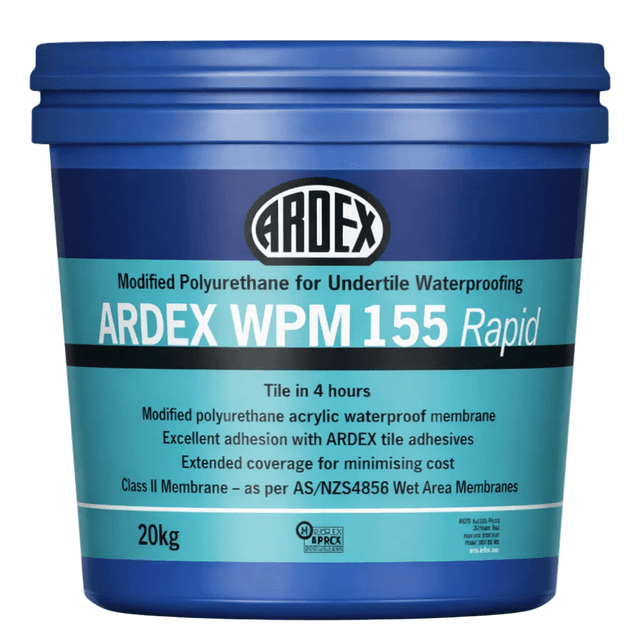
ARDEX WPM155 RAPID 20 kg
Ardex
$299.70 each + GST
$344.66 each incl. GST
- In stock
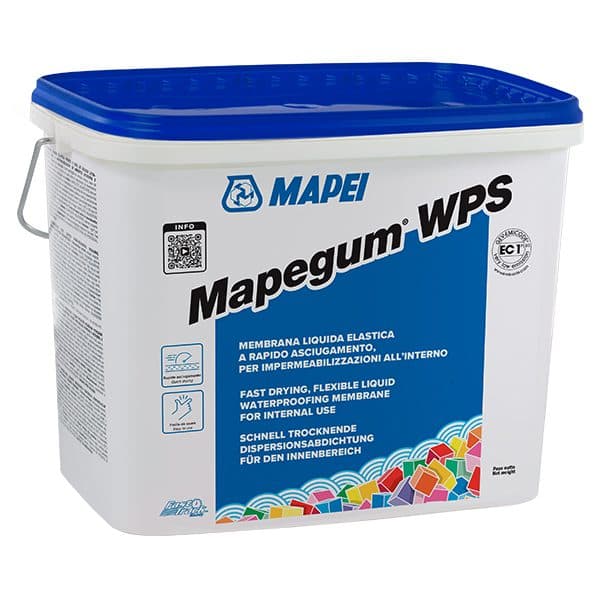
Mapei Mapegum WPS 20kg
Mapei
$191.27 each + GST
$219.96 each incl. GST
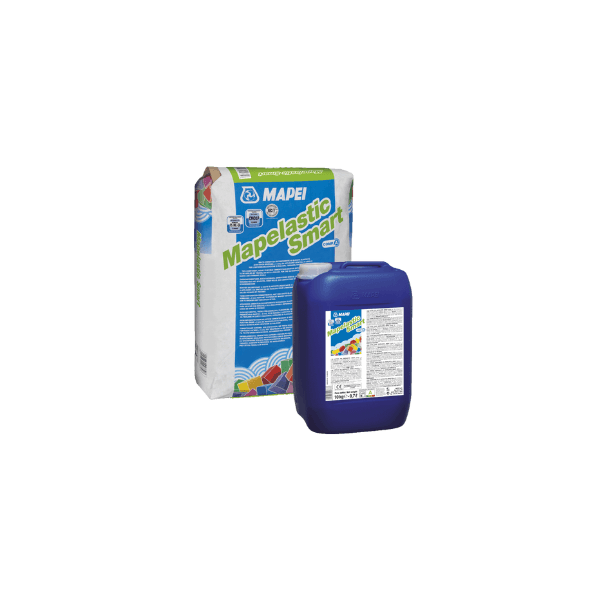
Mapei Mapelastic Smart Kit A and B
Mapei
$192.16 each + GST
$220.98 each incl. GST
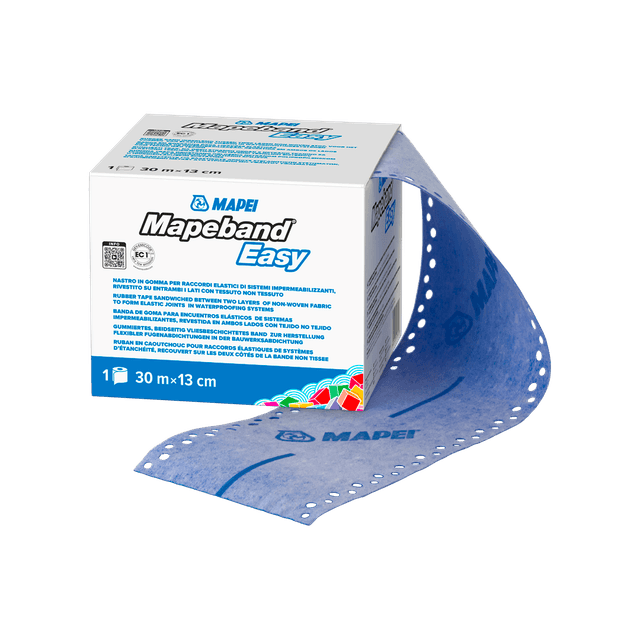
Mapei Mapeband Easy Roll 30m x 13cm
Mapei
$104.62 each + GST
$120.31 each incl. GST
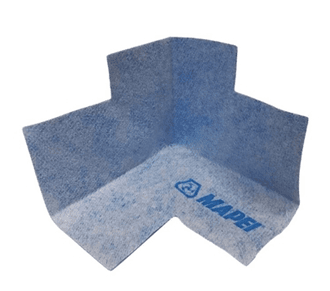
Mapei Mapeband Easy Inside Corner 90*
Mapei
$10.65 each + GST
$12.25 each incl. GST
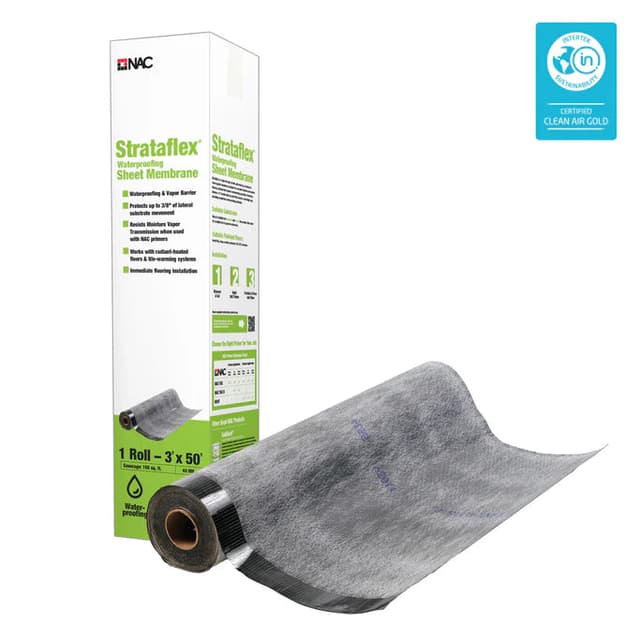
STRATAFLEX Waterproofing Membrane
Technokolla
$36.10 each + GST
$41.52 each incl. GST
Curing and flood testing
A membrane must be fully cured before it is tested or tiled. Curing time depends on the product, the film thickness, temperature and humidity, so follow the data sheet rather than a rule of thumb.
The IWAM Code of Practice requires every membrane to be visually inspected and flood tested once complete and fully cured, before any tiles go on:
- Bung the waste and add a temporary water-stop at any threshold.
- Fill the area with water from an external source (not the shower rose) up to the lowest threshold.
- Check for water loss after 12 hours, and check adjacent areas and rooms below for staining.
- Repair, recoat and retest if anything leaks.
- A minimum 12-hour full area flood test is carried out and signed off.
Some councils and membrane suppliers ask for longer tests, so check what your consent or warranty requires.
Do I need a building consent?
It depends on the job. A new tiled shower in a new build or a new bathroom (adding sanitary fixtures) needs a consent. For work in an existing home, Schedule 1 of the Building Act allows some lining and finishing work without consent, and MBIE's Determination 2024/054 considered a case where replacing linings and installing a wet area membrane in an existing dwelling fell within Schedule 1 clause 12. Adding fixtures, changing structure or framing, or affecting specified systems still needs consent.
Exempt work must still comply with the Building Code, including E3. Because guidance in this area has changed in recent years, talk to your council (for example Central Otago District Council or Queenstown Lakes District Council) before you start.
PS3 producer statements: what they are and who issues them
building.govt.nz describes four producer statements: PS1 Design, PS2 Design Review, PS3 Construction and PS4 Construction Review. A PS3 (Construction) is often used by the installers of proprietary systems, such as waterproofing membranes. In practice:
- Who issues it: the applicator or installer who carried out the waterproofing, usually a company trained or approved by the membrane manufacturer.
- What it says: that the membrane was installed to the manufacturer's specifications and the consented documents.
- What it is not: building.govt.nz notes a producer statement is a professional opinion, not a product warranty or guarantee of compliance, and that producer statements have no particular status under the Building Act. The council decides whether to accept it and how much weight to give it.
Whether a PS3 is required, and in what format, is up to your council and your consent. Many councils have their own PS3 waterproofing forms. If your project needs one, agree before work starts that the waterproofing installer will provide it on completion, and ask any installer you are considering whether they can.
Council inspections
building.govt.nz lists a tanking or waterproofing inspection among the common residential inspections, taken before tiles are laid in wet areas such as showers. A pre-line inspection, before linings go on, may include checking plumbing under a pressure test. The inspections for your job are listed in your building consent, and missing one can mean work has to be opened up again. Keep flood test records, photos and product data sheets on site.
Common waterproofing failures to avoid
- Leaks at floor-to-wall and hob-to-wall junctions and around wastes, which BRANZ identifies as common leak points.
- Timber hobs, which BRANZ advises against.
- Mixing products from different systems, or an adhesive that is not approved for the membrane.
- Unsealed tapware and mixer penetrations.
- Using grout instead of flexible sealant at changes of plane and junctions with fixtures.
Get the right products and the right people
Our Cromwell showroom stocks membranes, primers, tapes, screeds, shower bases, floor wastes, adhesives and grouts, and we are happy to talk through a system for your bathroom. Visit us at Unit 2/4 Cemetery Road, Cromwell (see the showroom page), browse tiling supplies, or email contact@atelierceramics.co.nz.
Our sister business Nunes Tiling supplies and installs wet area membranes and tiling across Central Otago, including Cromwell, Wanaka, Queenstown and Alexandra. Ask about waterproofing documentation for your council when you request a quote through our installation page.
For the tiles themselves, see our guides on choosing tiles by room and grout.
Questions
- Is tile and grout waterproof on its own?
- No. Cement-based grout and tile joints let water through, so tiled showers need a waterproofing membrane behind and under the tiles. BRANZ notes the only exception for shower tiling is a steel-trowelled or polished concrete substrate.
- What fall does a tiled shower floor need in NZ?
- E3/AS1 Amendment 7 paragraph 3.3.2.3 requires open showers, and showers without an upstand, to fall at no less than 1:50 toward the floor waste across a 1500 mm radius from below the shower rose. The fall must be built into the substrate or screed, not the membrane.
- How high should shower waterproofing go?
- E3/AS1 Amendment 7 asks for impervious wall finishes to the higher of 1800 mm above the floor or 50 mm above the rose. The IWAM Code of Practice used by E3/AS2 asks for membranes to the higher of 1800 mm or 300 mm above the rose. Going to 300 mm above the rose, or to the ceiling, satisfies both.
- What water absorption do bathroom tiles need?
- E3/AS1 allows ceramic or stone tiles with up to 6% water absorption in showers and wet areas. BRANZ recommends 3% or less where possible. Porcelain absorbs 0.5% or less.
- How long should a shower flood test run?
- The IWAM Code of Practice requires a minimum 12-hour full area flood test after the membrane has fully cured and before tiling, using water from an external source rather than the shower. Some councils or suppliers ask for longer, so check your consent and warranty conditions.
- What is a PS3 and who provides it?
- A PS3 is a producer statement for construction. For waterproofing it is usually provided by the membrane applicator to say the system was installed to the manufacturer's specification and the consented plans. It is not a warranty, and councils decide whether to accept it.
- Do I need a building consent to retile my shower?
- It depends on the work. Some lining and membrane work in an existing home may be exempt under Schedule 1, as considered in Determination 2024/054, but adding fixtures or changing structure needs consent. Always check with your council first.
- Liquid or sheet membrane: which is better?
- Neither is better in every case. Liquid membranes suit complex shapes and many penetrations; sheet membranes give a consistent factory thickness and no coat curing time. Choose a complete system to AS/NZS 4858 suited to your substrate and expected movement.